26.7. Performance comparison
HexLLL is benchmarked against the verified Isabelle LLL_Basis_Reduction
extraction and the unverified floating-point fpLLL, across six input families
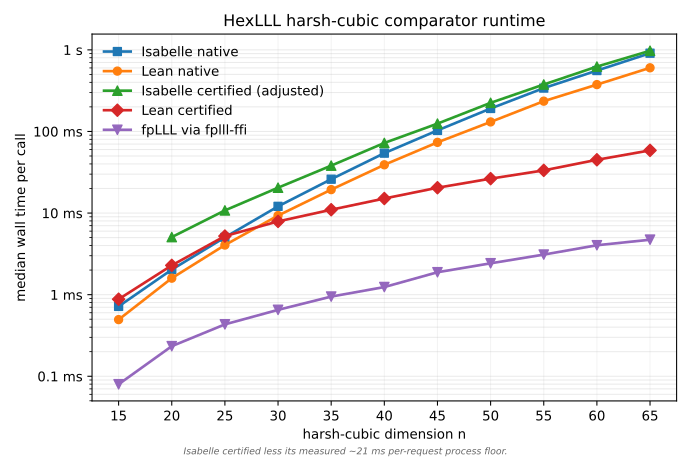
that each stress a different cost. Here is harsh-cubic, where the entry
bit-length grows with the dimension:
26.7.1. The five curves
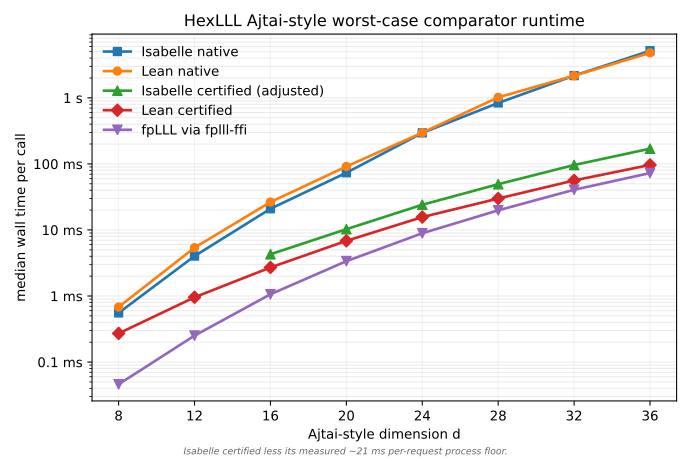
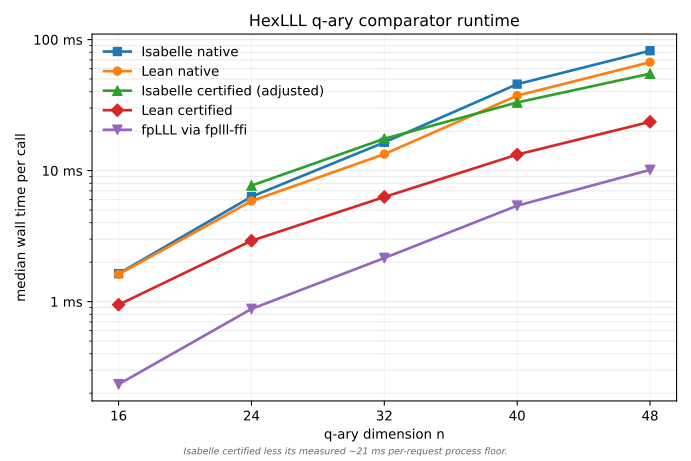
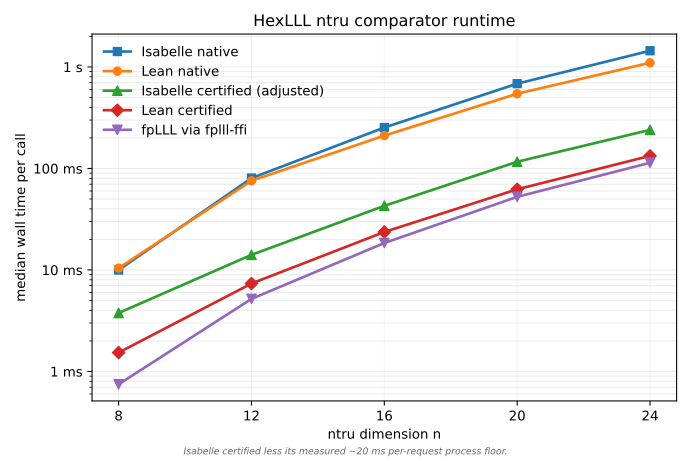
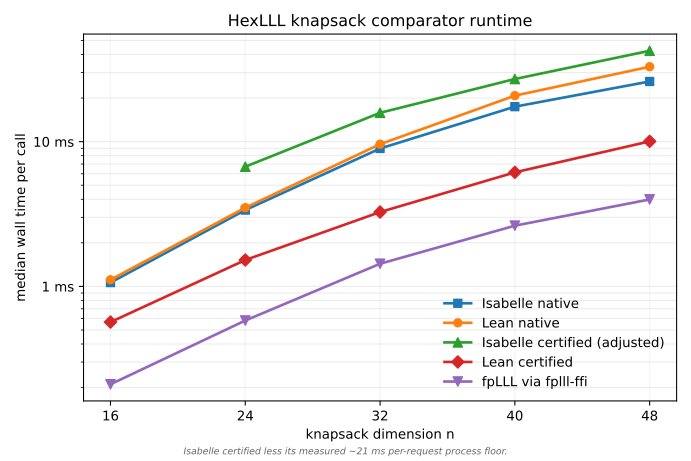
Each plot is log-scale wall-time per reduction against the family dimension:
-
fpLLL: the raw floating-point reducer, unverified; the speed baseline. -
Lean native:Hex.lllNative, the exact all-integerd/νreducer. Correct by construction, but its exact arithmetic pays for wide operands and high swap counts. -
Lean certified: anfpLLLcandidate checked by the verified Lean checkerHex.certCheck. It inherits floating-point speed and adds only a cheap integer check, so it stays close to thefpLLLcurve while remaining fully verified. -
verified Isabelle native: the Isabelle extraction's own reducer; the independent verified point of comparison. -
verified Isabelle certified: the samefpLLLcandidate checked by the Isabelle checker instead of the Lean one; the apples-to-apples yardstick for the Lean certified path.
26.7.2. The six input families
Each family is a faithful port of an fplll generator, and stresses a different part of the algorithm:
-
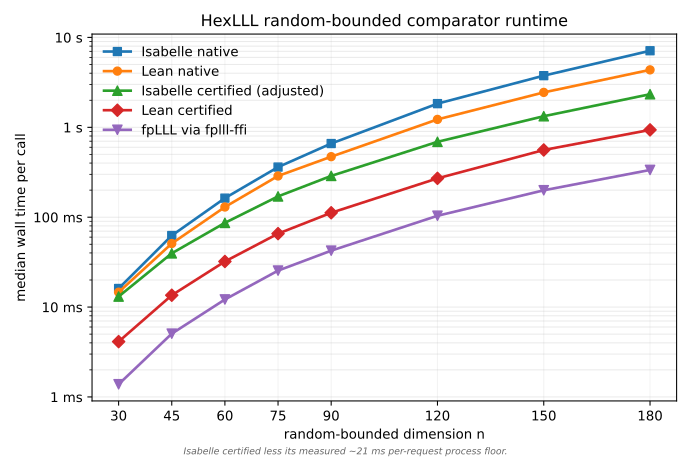
random-bounded: near-orthogonal random bases; the easy baseline, few swaps. -
harsh-cubic: entries of bit-length about3.3·n; exact-integer operand-width growth (shown above). -
ajtai: fplllgen_trgworst-case triangular bases; the swap / iteration countΘ(d² log B)(shown in the introduction). -
q-ary: LWE/SIS bases[[I, H], [0, qI]]; the cryptographic Z-shape. -
ntru: bases[[I, Rot h], [0, qI]]; a planted dense sublattice plus a q-block. -
knapsack: the rectangulard × (d+1)integer-relation form; the only family with more columns than rows, using them > nconstruction.
Across every family the exact reducers are correct but climb steeply on the hard
bases, while Lean certified stays within about 1.2 to 2.5 times raw fpLLL:
verified output at close to floating-point cost. Selecting the certified
versus native path is the runtime switch described under
Certified external reduction; the η = 11/20
constants both paths report are explained under
the size-reduction bound.
26.7.3. The other families
The remaining comparator plots, for reference: